Buy btools.eu ?
We are moving the project
btools.eu .
Are you interested in purchasing the domain
btools.eu ?
domain@kv-gmbh.de · 0541-91531010
Buy btools.eu ?
What is the efficiency of a pulley system?
The efficiency of a pulley system is determined by the ratio of the output force to the input force. In an ideal pulley system with no friction, the efficiency is 100% because the output force is equal to the input force. However, in real-world applications, some energy is lost to friction and other factors, so the efficiency is typically less than 100%. The efficiency can be improved by using pulleys with low friction bearings and by properly maintaining the system. **
Can someone explain the efficiency of a pulley system to me?
A pulley system is a simple machine that consists of a wheel with a groove around its circumference and a rope or belt that runs along the groove. The efficiency of a pulley system is determined by the mechanical advantage it provides, which is the ratio of the output force to the input force. By using multiple pulleys in a system, the force required to lift an object can be reduced, making the task easier. This is because the pulleys distribute the load and allow the force to be applied over a longer distance, resulting in less effort needed to lift the object. Overall, the efficiency of a pulley system allows for the amplification of force and the reduction of effort required to perform tasks such as lifting heavy objects. **


Similar search terms for Pulley
Top-Angebote
Products related to Pulley:
-
BGA DC2201 Tensioner pulleyWidth [mm]: 25, 26; Diameter 1 [mm]: 70; Outer Diameter [mm]: 70; Driven Units: Alternator, Air conditioning compressor; Construction Year from: 03/2000, 01/1999, 02/2000; Vehicle Equipment: for vehicles with air conditioning, for vehicles without air conditioning; Required quantity: 2; Engine Number to: 34980814,99 £*Shipping: 8,45 £Secure redirect to the provider
-
CORTECO 49114171 Crankshaft pulleyNumber of ribs: 5; Vehicle Equipment: for vehicles with start-stop function, for vehicles without start-stop function; Supplementary Article / Supplementary Info Info 2: Decoupled, with mounting manual; Outer Diameter [mm]: 135; Parameter: 6PK; TecDoc Engine Number: 33102, 37173, 34645, 36662, 34874, 36992, 40415, 45771, 34889, 37415; Transmission Type: 6-Speed Manual Transmission, 7-Speed Dual-Clutch Transmission71,99 £*Shipping: 8,45 £Secure redirect to the provider
-
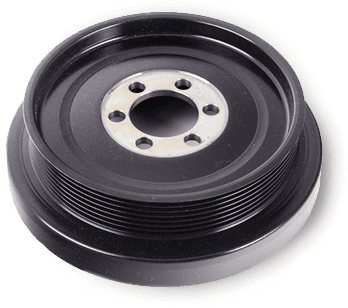
CORTECO 49170245 Crankshaft pulleyWeight [kg]: 1,5; Number of ribs: 6; Vehicle Equipment: for vehicles with start-stop function, for vehicles without start-stop function; Supplementary Article / Supplementary Info Info 2: Decoupled, with mounting manual; Parameter: 7PK; Transmission Code: ND4, NDS, FK0; Transmission Type: 6-Speed Manual Transmission, CVT automatic transmission (stepless); with Stamped Marking: 123034219R; TecDoc Engine Number: 33677, 31564; Construction Year from: 07/201478,99 £*Shipping: 8,45 £Secure redirect to the provider



-
How can the efficiency of a pulley system be determined in physics?
The efficiency of a pulley system in physics can be determined by comparing the work input to the work output. The work input is the force applied to the pulley system multiplied by the distance over which the force is applied. The work output is the force exerted by the pulley system multiplied by the distance over which the force is exerted. By comparing these two values, the efficiency of the pulley system can be calculated using the formula: Efficiency = (Work output / Work input) * 100%. This calculation provides a measure of how effectively the pulley system is able to transfer input work into output work. **
-
What is a pulley 988?
A pulley is a simple machine that consists of a wheel with a groove around its circumference and a rope or belt that runs along the groove. It is used to change the direction of a force, allowing for easier lifting or moving of heavy objects. By using multiple pulleys in a system, one can create a mechanical advantage that reduces the amount of force needed to lift an object. Pulleys are commonly used in various applications, such as elevators, cranes, and exercise equipment. **
-
Why does the pulley squeak?
The pulley may squeak due to lack of lubrication. Over time, the moving parts of the pulley can become dry and start to rub against each other, causing friction and the squeaking sound. Additionally, dirt and debris can accumulate in the pulley, further contributing to the squeaking noise. Regular maintenance and lubrication can help prevent the pulley from squeaking. **
-
Is a shoelace a pulley?
No, a shoelace is not a pulley. A pulley is a simple machine that consists of a wheel with a groove around its circumference and a rope or belt that runs along the groove. The purpose of a pulley is to change the direction of a force or to provide mechanical advantage. On the other hand, a shoelace is a type of cord or string used to fasten and tighten shoes. While both a pulley and a shoelace involve the use of a cord or string, they serve different purposes and have different mechanical functions. **


What is a pulley system?
A pulley system is a simple machine that consists of a wheel with a groove around its circumference and a rope or belt that runs along the groove. It is used to lift or move heavy objects by applying force to one end of the rope while the object is attached to the other end. The pulley system allows for the force to be distributed and redirected, making it easier to lift heavy loads. It is commonly used in various applications such as construction, transportation, and mechanical systems. **
What is a pulley in physics?
In physics, a pulley is a simple machine that consists of a wheel with a groove around its circumference and a rope or belt that runs along the groove. Pulleys are used to change the direction of a force, allowing for easier lifting or pulling of heavy objects. They can also be used to provide mechanical advantage, allowing a smaller force to lift a larger weight. Pulleys are commonly used in various applications, such as elevators, cranes, and exercise equipment. **
Top-Angebote
Products related to Pulley:
-
Smart Shopping Spot Home Gym Pulley System Cable Pulley Machine With Tricep Pulley Attachment For Full Upper Body Training Home Gym Pulley System Cable Pulley Machine With Tricep Pulley Attachment For Full Upper Body TrainingExperience smooth, effective strength training without leaving home. This Home gym pulley system is designed for fitness enthusiasts who want to build muscle, improve endurance, and maximize every workout. Whether you're targeting your back, arms,...109,97 $*Shipping: 0,00 $Secure redirect to the provider
-
BGA DC2201 Tensioner pulleyWidth [mm]: 25, 26; Diameter 1 [mm]: 70; Outer Diameter [mm]: 70; Driven Units: Alternator, Air conditioning compressor; Construction Year from: 03/2000, 01/1999, 02/2000; Vehicle Equipment: for vehicles with air conditioning, for vehicles without air conditioning; Required quantity: 2; Engine Number to: 34980814,99 £*Shipping: 8,45 £Secure redirect to the provider
-
What is the efficiency of a pulley system?
The efficiency of a pulley system is determined by the ratio of the output force to the input force. In an ideal pulley system with no friction, the efficiency is 100% because the output force is equal to the input force. However, in real-world applications, some energy is lost to friction and other factors, so the efficiency is typically less than 100%. The efficiency can be improved by using pulleys with low friction bearings and by properly maintaining the system. **
-
Can someone explain the efficiency of a pulley system to me?
A pulley system is a simple machine that consists of a wheel with a groove around its circumference and a rope or belt that runs along the groove. The efficiency of a pulley system is determined by the mechanical advantage it provides, which is the ratio of the output force to the input force. By using multiple pulleys in a system, the force required to lift an object can be reduced, making the task easier. This is because the pulleys distribute the load and allow the force to be applied over a longer distance, resulting in less effort needed to lift the object. Overall, the efficiency of a pulley system allows for the amplification of force and the reduction of effort required to perform tasks such as lifting heavy objects. **
-
How can the efficiency of a pulley system be determined in physics?
The efficiency of a pulley system in physics can be determined by comparing the work input to the work output. The work input is the force applied to the pulley system multiplied by the distance over which the force is applied. The work output is the force exerted by the pulley system multiplied by the distance over which the force is exerted. By comparing these two values, the efficiency of the pulley system can be calculated using the formula: Efficiency = (Work output / Work input) * 100%. This calculation provides a measure of how effectively the pulley system is able to transfer input work into output work. **
-
What is a pulley 988?
A pulley is a simple machine that consists of a wheel with a groove around its circumference and a rope or belt that runs along the groove. It is used to change the direction of a force, allowing for easier lifting or moving of heavy objects. By using multiple pulleys in a system, one can create a mechanical advantage that reduces the amount of force needed to lift an object. Pulleys are commonly used in various applications, such as elevators, cranes, and exercise equipment. **
Similar search terms for Pulley
-
CORTECO 49114171 Crankshaft pulleyNumber of ribs: 5; Vehicle Equipment: for vehicles with start-stop function, for vehicles without start-stop function; Supplementary Article / Supplementary Info Info 2: Decoupled, with mounting manual; Outer Diameter [mm]: 135; Parameter: 6PK; TecDoc Engine Number: 33102, 37173, 34645, 36662, 34874, 36992, 40415, 45771, 34889, 37415; Transmission Type: 6-Speed Manual Transmission, 7-Speed Dual-Clutch Transmission71,99 £*Shipping: 8,45 £Secure redirect to the provider
-
CORTECO 49170245 Crankshaft pulleyWeight [kg]: 1,5; Number of ribs: 6; Vehicle Equipment: for vehicles with start-stop function, for vehicles without start-stop function; Supplementary Article / Supplementary Info Info 2: Decoupled, with mounting manual; Parameter: 7PK; Transmission Code: ND4, NDS, FK0; Transmission Type: 6-Speed Manual Transmission, CVT automatic transmission (stepless); with Stamped Marking: 123034219R; TecDoc Engine Number: 33677, 31564; Construction Year from: 07/201478,99 £*Shipping: 8,45 £Secure redirect to the provider
-
CORTECO 80000205 Crankshaft pulleyNumber of ribs: 5; See accessories list for additionally required parts: ; Supplementary Article / Supplementary Info Info 2: Decoupled, with mounting manual; Outer Diameter [mm]: 136; Parameter: 6PK; Vehicle type: JA0J, S53J, S534, S53K, S48H37,99 £*Shipping: 8,45 £Secure redirect to the provider
-
Why does the pulley squeak?
The pulley may squeak due to lack of lubrication. Over time, the moving parts of the pulley can become dry and start to rub against each other, causing friction and the squeaking sound. Additionally, dirt and debris can accumulate in the pulley, further contributing to the squeaking noise. Regular maintenance and lubrication can help prevent the pulley from squeaking. **
-
Is a shoelace a pulley?
No, a shoelace is not a pulley. A pulley is a simple machine that consists of a wheel with a groove around its circumference and a rope or belt that runs along the groove. The purpose of a pulley is to change the direction of a force or to provide mechanical advantage. On the other hand, a shoelace is a type of cord or string used to fasten and tighten shoes. While both a pulley and a shoelace involve the use of a cord or string, they serve different purposes and have different mechanical functions. **
-
What is a pulley system?
A pulley system is a simple machine that consists of a wheel with a groove around its circumference and a rope or belt that runs along the groove. It is used to lift or move heavy objects by applying force to one end of the rope while the object is attached to the other end. The pulley system allows for the force to be distributed and redirected, making it easier to lift heavy loads. It is commonly used in various applications such as construction, transportation, and mechanical systems. **
-
What is a pulley in physics?
In physics, a pulley is a simple machine that consists of a wheel with a groove around its circumference and a rope or belt that runs along the groove. Pulleys are used to change the direction of a force, allowing for easier lifting or pulling of heavy objects. They can also be used to provide mechanical advantage, allowing a smaller force to lift a larger weight. Pulleys are commonly used in various applications, such as elevators, cranes, and exercise equipment. **
* All prices are inclusive of VAT and, if applicable, plus shipping costs. The offer information is based on the details provided by the respective shop and is updated through automated processes. Real-time updates do not occur, so deviations can occur in individual cases. ** Note: Parts of this content were created by AI.